By EC Team · Updated September 22, 2026 · 8 min read
When you discover an appealing product with strong monthly sales, solid margins, and surprisingly few competitors through front-end research, take a pause before contacting suppliers or placing a deposit. This may not be an undiscovered blue ocean, but a well-disguised intellectual property (IP) trap.
A common pitfall for new sellers is shipping inventory directly to Amazon FBA warehouses, only to receive an IP infringement notice just as sales begin to pick up, resulting in listing removals or frozen funds.
While modern AI tools can assist with preliminary risk screening, AI cannot guarantee 100% accuracy and bears no legal responsibility. To build a sustainable Amazon business, performing manual cross-verification through official legal databases remains an essential skill for every seller.
1. Trademark Clearance: The Danger of “Generic-Looking” Keywords
Trademark infringement is often the most subtle trap for new sellers. It rarely happens because a seller intentionally steals a famous brand name; rather, it happens when a seller unknowingly places a trademarked term inside their product title, bullet points, or backend Search Terms, treating it as a generic product descriptor.
A Real-World Cautionary Case: The “STITCHY” Trap
Take the popular mini micro-stitching gun category as a prime example:
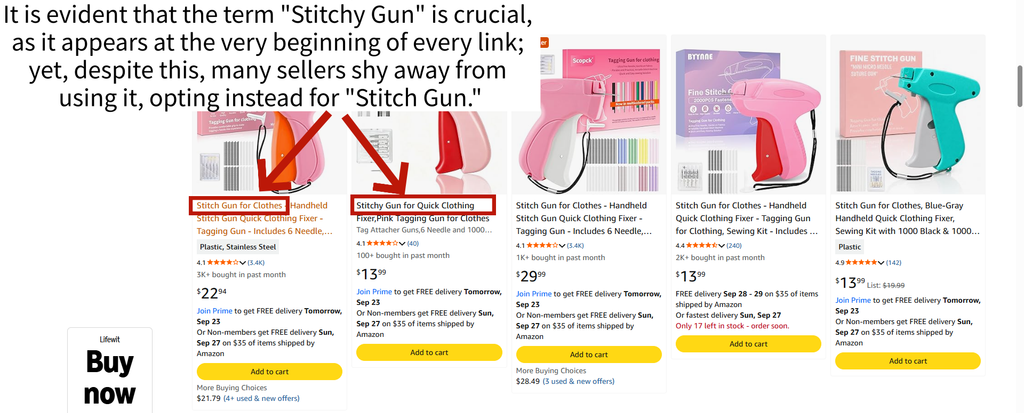
Screenshot for educational and demonstration purposes only.
All brand names, product images, and trademarks belong to their respective owners.
When researching this niche, “Stitchy Gun” looks like a standard high-volume keyword for quick clothing fixers. However, running this exact term through the WIPO Global Brand Database reveals a dangerous reality:
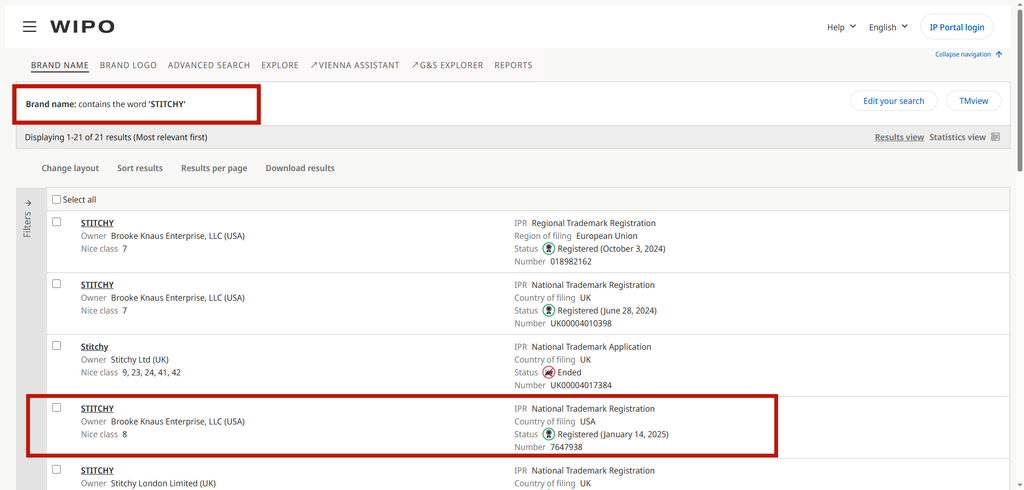
Screenshot for educational and demonstration purposes only.
All brand names, product images, and trademarks belong to their respective owners.
Sellers who mistook “Stitchy” for a generic descriptive word and embedded it in their listing titles received formal IP infringement notices from Amazon, resulting in immediate listing enforcement and potential account damage.
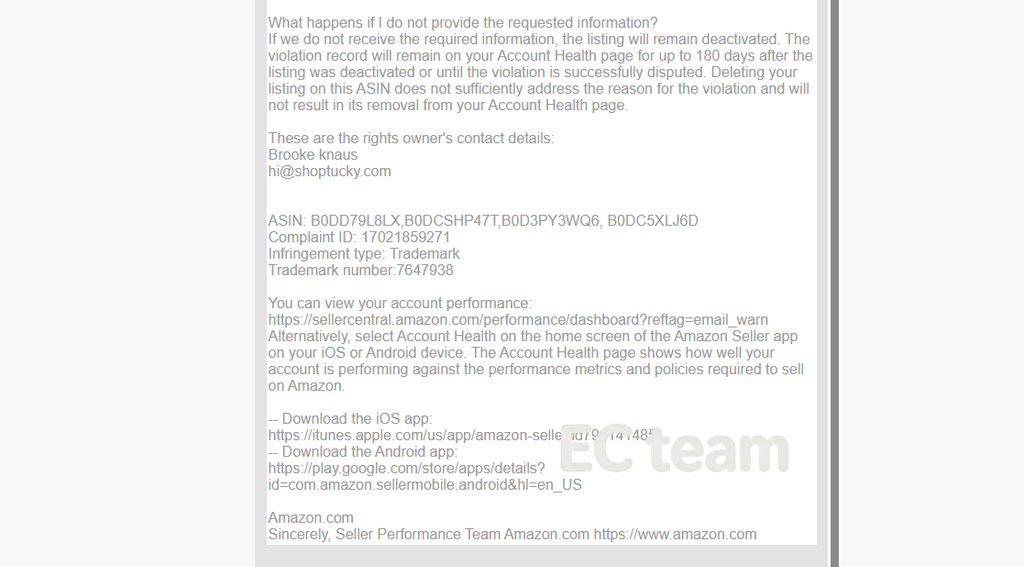
This exact notification is from our own hard-learned lesson. A single moment of oversight—assuming a high-volume keyword was just a generic product descriptor—cost us valuable time and sales momentum. We share this painful experience because we know firsthand how easily even careful sellers can fall into this trap if they don’t perform a manual database check.
Step-by-Step Trademark Verification Workflow
To prevent your prospective product from suffering the same fate, perform this quick 3-step check before writing your listing copy:
- Query via WIPO: Visit the official WIPO Global Brand Database and input your target feature terms or prospective brand name.
- Match the Marketplace & Class: Check if the word has an active LIVE status in your target selling country (e.g., USA) and matches your product’s Nice Classification (e.g., Class 8 for hand tools).
- Filter Out Protected Terms: If a term is registered under your category class, never use it in your title, bullet points, or backend Search Terms. Use purely generic alternative descriptions instead (e.g., using “Quick Clothing Tagging Gun” instead of “Stitchy Gun”).
2. Patent Clearance: The Risk of Hidden Utility Patents
Unlike trademark checks which focus on listing text, patent clearance requires examining the product’s physical design and mechanical structure. High-selling items that look like generic factory molds often hide active Design Patents (protecting appearance) or Utility Patents (protecting functional mechanics).
Case Study: The Interactive Dancing Toy
Take this popular interactive dancing toy as an example:
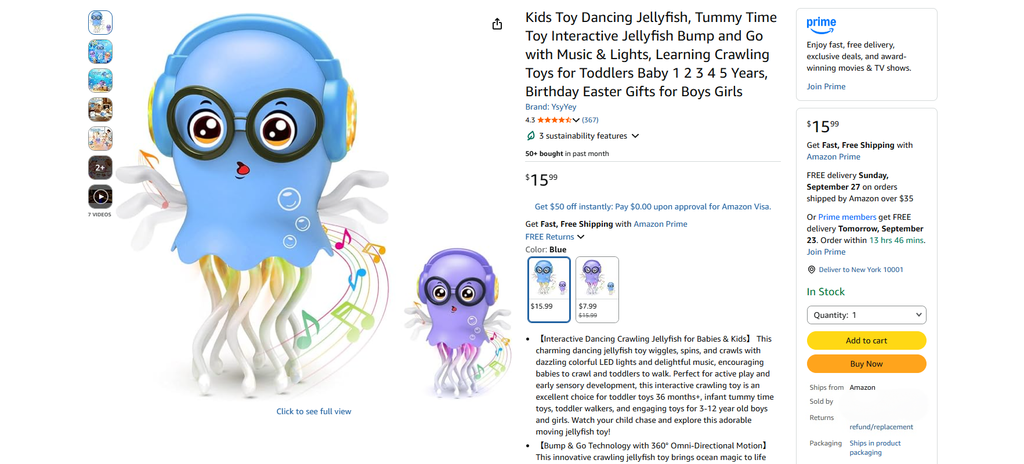
Screenshot for educational and demonstration purposes only.
All brand names, product images, and trademarks belong to their respective owners.
At first glance, this appears to be a standard open-domain toy sourced directly from overseas manufacturers. However, conducting a structure and keyword query on the USPTO Patent Search portal reveals an active US Utility Patent guarding its internal mechanical components:
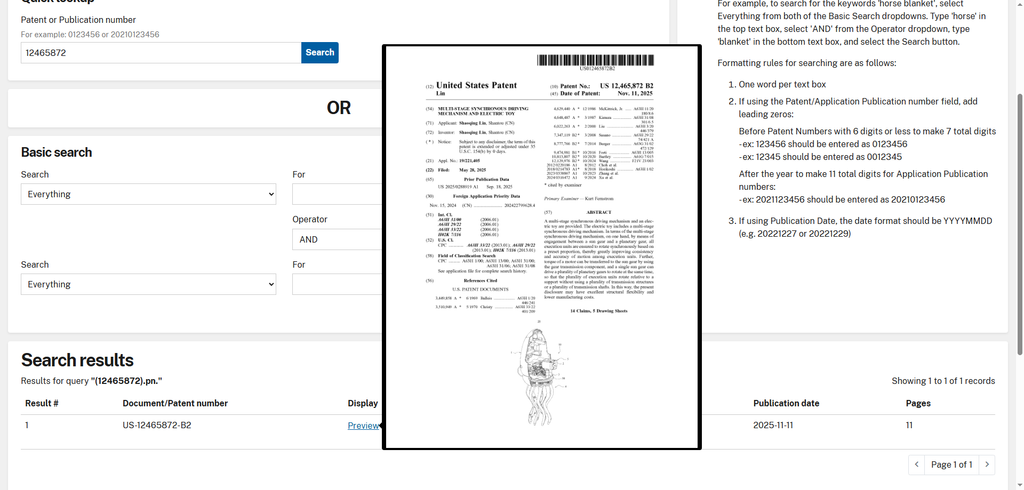
As detailed in Patent US 12,465,872 B2, the patent covers the multi-stage planetary gear driving mechanism that creates the toy’s synchronized dancing and swinging motion. Sellers who sourced this item without verifying its mechanical patent faced immediate enforcement actions and legal suits.
Simple 3-Step Patent Check Using USPTO
You can screen for major patent risks for free using the official USPTO Patent Public Search portal in under 10 minutes:
- Use Quick Lookup or Basic Search: Go to the USPTO search portal. If you know a competitor’s patent number, enter it in Quick Lookup. Otherwise, use Basic Search and type your product’s core keywords
- Review Official Line Drawings: Click on matching search results to view the official patent document. Scroll to the drawing sheets and compare the product’s visual outline and internal structure directly with your supplier’s factory photos.
- Verify Patent Status: Check the document’s publication date and status to confirm whether it is an active, granted patent protecting the current marketplace.
3. Copyright Compliance: Why You Should Never Reuse Product Images
Copyright protects original creative works, including product packaging, listing descriptions, graphics, and official product photography.
Many sellers falsely believe that copyright complaints only target famous cartoon characters or artwork. In reality, one of the most common causes of listing enforcement on Amazon is using photography or graphics registered by competitors.
Case Study: The Beverage Barricade Image Copyright
Take this popular beverage can protector as an example:
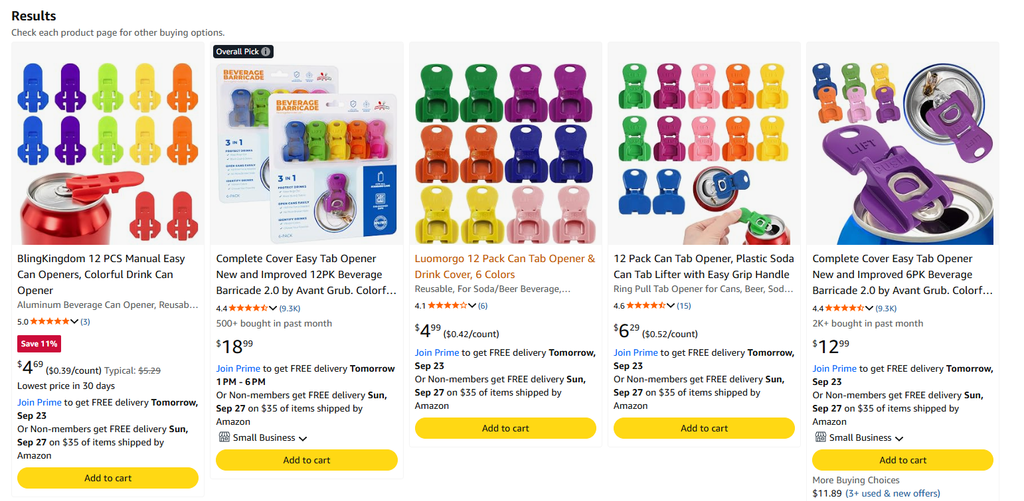
Screenshot for educational and demonstration purposes only.
All brand names, product images, and trademarks belong to their respective owners.
A new seller might be tempted to copy or edit the high-quality main images and infographics supplied by a factory or taken directly from top listings. However, querying the U.S. Copyright Office Public Catalog using the product title reveals a registered copyright entry:
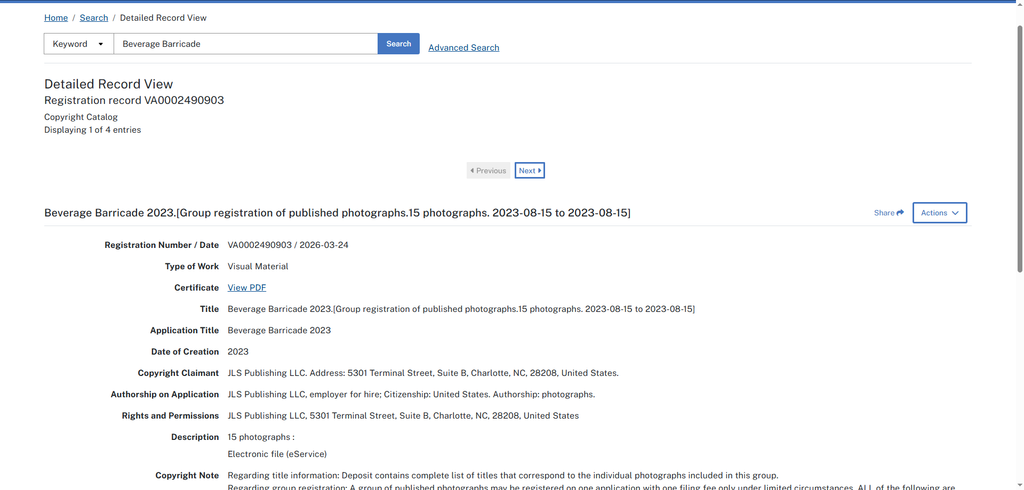
As shown in Registration VA0002490903, the copyright claimant JLS Publishing LLC formally registered a group of 15 published photographs for the “Beverage Barricade 2023” product line under Visual Material. If another seller uses these photos or modified renders on their own listing, the copyright owner can submit a DMCA takedown notice, causing immediate listing suspension.
Simple 3-Step Copyright Verification & Prevention
Because copyright is automatically established upon creation, not finding a registered database record does not grant permission to copy. Follow these rules to remain 100% compliant:
- Search Company/Product Titles: Go to the U.S. Copyright Office Portal and search the competitor’s brand name or product name (e.g.,
Beverage Barricade) to check if they proactively register photography or visual material. - Never Copy Competitor Media: Never download, edit, or crop competitor main images, infographics, A+ content, or promotional videos.
- Insist on 100% Original Assets: Always take your own product photos and write unique listing titles and bullet points from scratch. Original visual assets are your strongest protection against copyright claims.
Summary
In your product research workflow, legal and compliance clearance should always precede financial commitment. Spending 15 to 30 minutes verifying a potential product idea using official tools protects your business from major account risks before moving on to quantitative data analysis.